
Tactical Tuesday: The NPVS-14 and Why Serious Operators Own the Night
Posted by AllGo Operators on Nov 10th 2026
The night doesn't hide anything. It just hides it from people without the right glass.
Welcome to Tactical Tuesday at AllGo Operators. Today we're breaking down the top-shelf night vision in our lineup, the AllGoOperators NPVS-14 Gen 2+ White Phosphor PVS-14. It's the unit we'd hand to someone whose night work is real work.
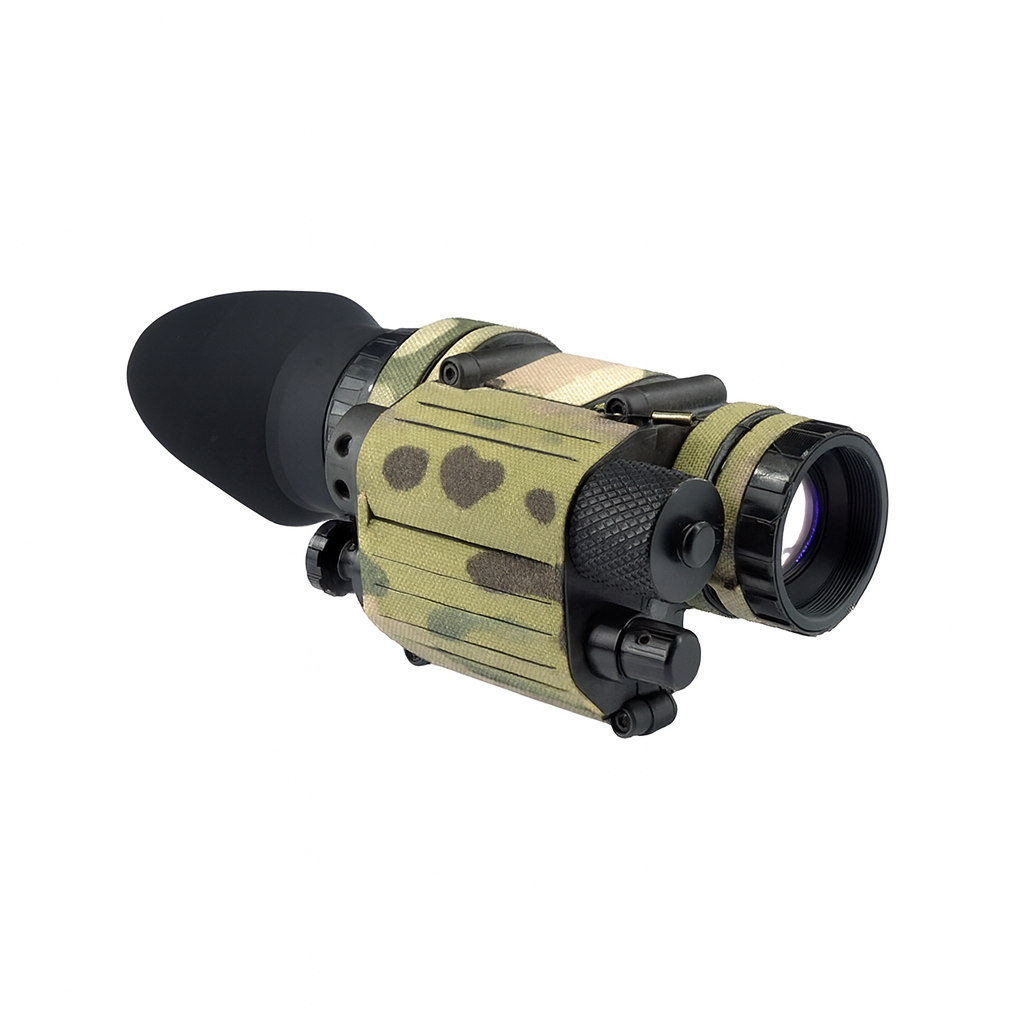
Make it yours: a PVS-14 in our Multicam Wrap for PVS-14.
The platform that earned its reputation
The PVS-14 format is the monocular that's been on helmets on night ops for a generation, and for good reason. One tube, one eye, light weight, and total flexibility. Run it on your helmet, flip it up when you don't need it, pull it off for handheld scanning, or keep your unaided eye adapted to the dark while the other eye works the tube. The NPVS-14 is built on that proven platform, and it ships with a J-arm and helmet mount, so it's ready to rig out of the box.
What's inside the housing
- Gen 2+ image intensifier tube: a true analog tube, so you get no screen lag or refresh-rate stutter.
- P45 white phosphor (NNVT NTV7): a black-and-white image with crisp contrast that many operators find less fatiguing over a long night than classic green.
- 61 lp/mm resolution: enough detail to pick out shapes, edges, and movement at a distance.
- 24.32 signal-to-noise ratio @ 108 µlx: a cleaner image with less "sparkle" when the light gets thin.
- 1832 µA/lm integral sensitivity: it pulls usable images from very little ambient light.
- 18.5 mm cathode diameter.
- Manual gain control, plus ABC and ATG power-supply protection.
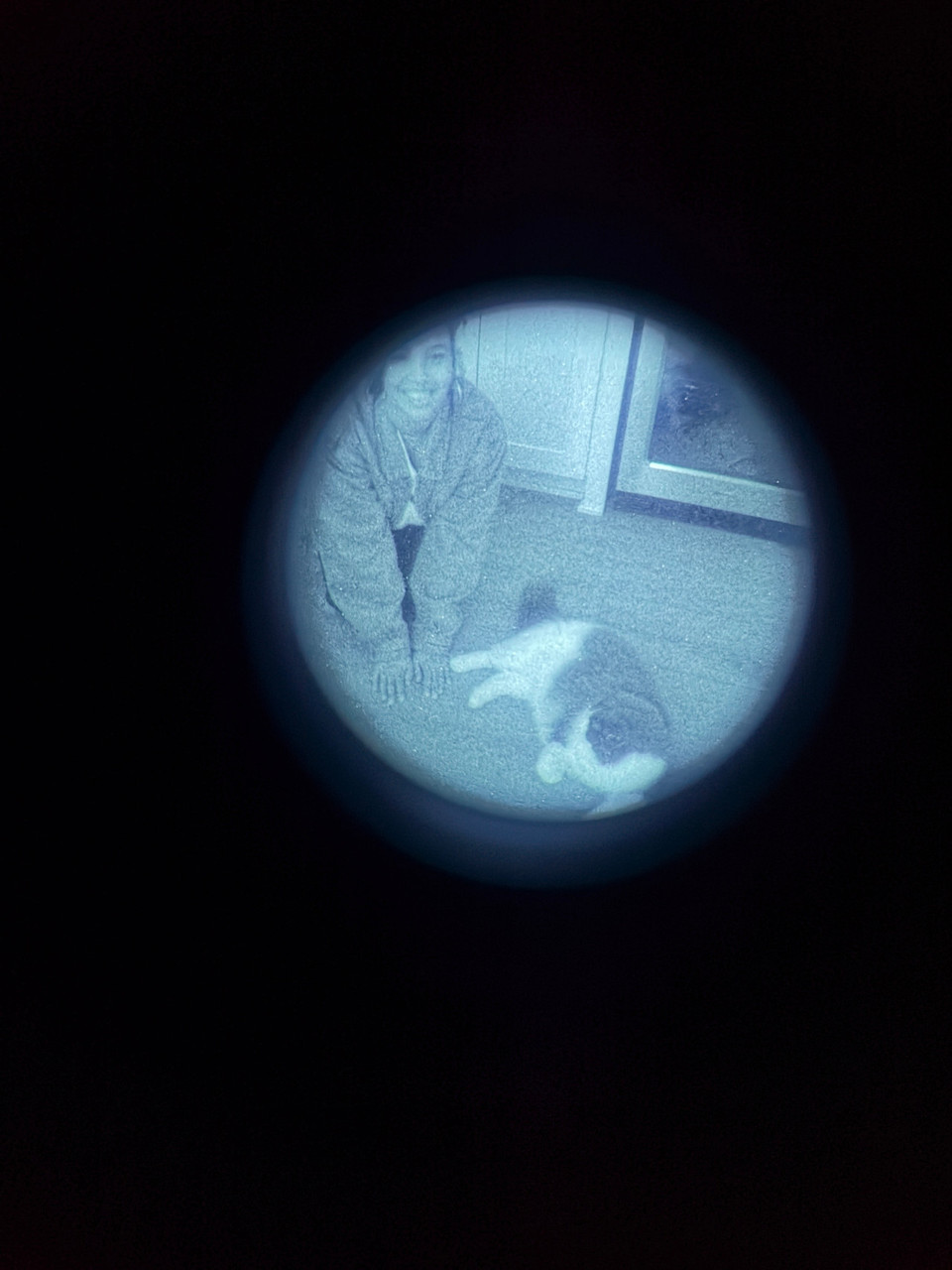
Through the tube: the crisp black-and-white image of P45 white phosphor in a dark room.
Why it beats the alternatives
Versus digital night vision: Digital units are a great entry point, but they lean on IR illuminators in true darkness, and anyone else running NODs can see that IR. They also add display latency. An analog Gen 2+ tube works passively off ambient light with zero lag, and that matters when you're moving, shooting, or driving under NODs.
Versus Gen 1 and budget tubes: Gen 1 gives you fuzzy edges, heavy distortion, and a constant need for extra light. Gen 2+ with these specs is a different class: sharper across the whole image, brighter, and far more usable when it's actually dark.
Manual gain is the operator's edge: Moon up, moon down, urban glow, or deep woods, you set the brightness to the environment instead of letting the tube guess. Turn it down to cut bloom around lights, and crank it up under heavy canopy.
Where it earns its keep
- Night movement and land navigation: Helmet-mounted, you get hands-free movement over terrain you'd otherwise be guessing at.
- Observation and overwatch: Scan tree lines, fields, and approaches long before anyone knows you're there.
- Hog hunting and predator control: Pair it with an IR laser or illuminator for after-dark work where it's legal.
- Security and property patrol: Check perimeters, outbuildings, and vehicles without lighting yourself up.
- Training: Low-light drills, vehicle work, and team movement. If you fight at night, you train at night.
Run it like a pro
- Get the eye relief and diopter dialed in before you step off, not in the field.
- Balance your helmet. A counterweight keeps your neck happy on long nights.
- Never power up the tube in bright light, and keep the lens cap on in daylight.
- Carry spare batteries, because cold drains them fast.
- Positive identification always comes first. Seeing a shape isn't the same as knowing what it is.
- Know your local laws on night hunting, IR use, and night vision.
The dark is only an advantage if it's yours. Gear up with the AllGoOperators NPVS-14 Gen 2+ White Phosphor PVS-14 at AllGo Operators, the best deal on a Gen 2+ PVS-14 we know of. See you next Tactical Tuesday.